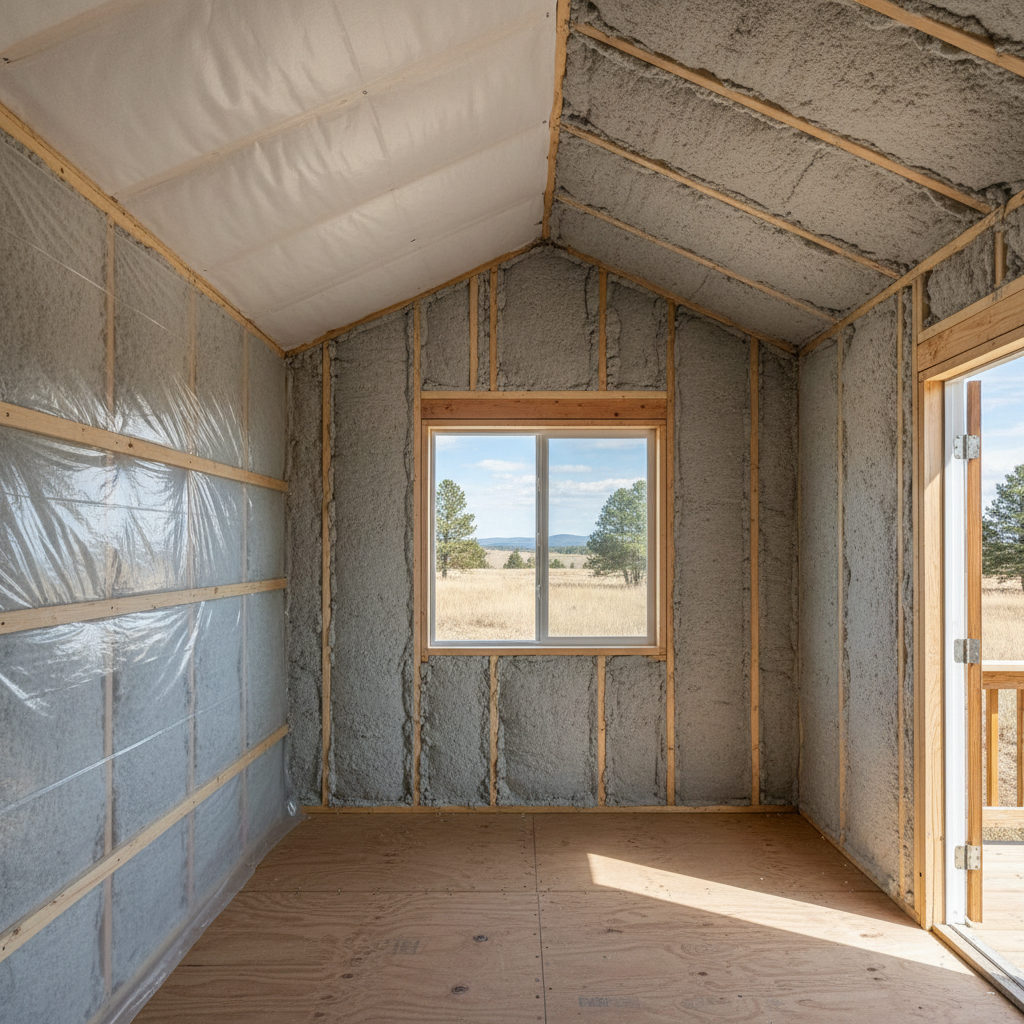
So, you've got a shed and you're thinking about insulating it. Smart move, I say. Whether you'll use it for a workshop, some extra storage, or just a quiet spot to get away from the kids for an hour, a well-insulated shed really changes things. But here's the deal: I've seen plenty of folks right here in Spearfish make some pretty common mistakes when they're planning or hiring for this kind of project. You definitely don't want to regret your choices later on, so let's chat about what to keep an eye out for.
Mistake #1: Forgetting About Moisture and Ventilation
This one's probably the biggest, especially around here. We get some pretty wild temperature swings in the Black Hills, and that means condensation is a real problem inside an unvented, insulated space. You might think, "Hey, I'll just seal it up tight!" But if you don't have a plan for moisture, you're just inviting mold, mildew, and rot. I've seen sheds in the Indian Creek area, for example, where people insulated without any thought to air flow. Within a year or two, the OSB walls were swelling and everything inside smelled musty. You really need to think about a vapor barrier on the warm side of the insulation, and just as important, proper ventilation. Ridge vents, soffit vents, or even a small exhaust fan can make a huge difference, believe me. Don't just insulate; think about the whole climate inside that shed.
Mistake #2: Picking the Wrong Insulation Type for a Shed
Not all insulation is the same, and what works great in your house might not be the best choice for a shed. I've had folks call me up, saying they just stuffed fiberglass batts between the studs and now it's all saggy and damp. Fiberglass is fine for some jobs, but in a shed, it's really prone to moisture issues if it's not installed perfectly with an excellent vapor barrier. Plus, critters just love to nest in it. For sheds, I often suggest something tougher. Rigid foam boards are a good bet because they offer a high R-value per inch and don't soak up moisture as easily. Even better, especially if you want to seal up all those tiny gaps and cracks, is spray foam. It creates an airtight seal, won't sag, and pests tend to avoid it. It's a bit more money upfront, but it really pays off in how long it lasts and how well it performs. Don't just grab whatever's cheapest at the hardware store without thinking about the shed's specific environment, okay?
Mistake #3: Ignoring the Floor and Door
People get so focused on the walls and ceiling that they completely forget about the floor and the main way in. Heat rises, sure, but a lot of cold can come up through an uninsulated floor, especially if your shed is just sitting on concrete blocks or a slab directly on the ground. If you've got a wooden floor, putting insulation underneath it with rigid foam or even closed-cell spray foam can make a huge difference. And the door? It's often the biggest thermal leak in the whole structure. I've seen beautifully insulated sheds with a flimsy, unsealed door that just lets all the conditioned air right out. You need to weatherstrip that door correctly, and if it's a standard utility door, think about adding a layer of rigid foam to the inside face. Don't let all your hard work on the walls and ceiling get undone by these overlooked spots.
Mistake #4: Going DIY Without the Right Tools or Know-How
I'm all for a good DIY project. It's super satisfying to do things yourself. But insulation, especially certain kinds, isn't always as simple as it looks on YouTube. Cutting rigid foam perfectly to fit without gaps takes patience and the right tools. Handling spray foam requires proper safety gear and an understanding of how it expands and sticks. I've seen people try to DIY spray foam and end up with a huge mess, or worse, a poorly insulated shed because they didn't get an even application. If you're not confident, or if it's a bigger project, it's often worth calling in a professional. We've got the equipment and the experience to get it done right the first time, saving you headaches and potential re-work later on. Sometimes, trying to save a buck upfront ends up costing you more in the long run, doesn't it?
Mistake #5: Not Getting Proper Quotes or Checking References
When you do decide to hire someone, don't just go with the first person who gives you a price. Get at least two or three quotes. Make sure they're detailed and clearly state what kind of insulation they're using, the R-value, and how they plan to handle moisture control and ventilation. Ask about their experience with sheds specifically. A lot of contractors are great at house insulation, but sheds have their own little quirks. And always, always ask for references. Call those references! Ask if the job was finished on time, if there were any hidden costs, and if they'd hire them again. It's your money and your shed; you've got every right to be thorough. Here at Paradise Insulation Inc, we're always happy to walk you through our process and show you examples of our work. We believe in being transparent because we want you to be happy with the end result.
Insulating your shed is a smart investment, but only if you do it right. Avoid these common mistakes, and you'll have a comfortable, functional space that lasts for years. Good luck with your project!